Mexico’s Long War: Drugs, Crime, and the Cartels
Updated
Violence continues to rage some two decades after the Mexican government launched a war against drug cartels, fueling ongoing instability and challenging U.S.-Mexico security cooperation.
- Mexican drug cartels are leading suppliers of cocaine, heroin, methamphetamine, and other illicit narcotics to the United States. The trade fuels rampant corruption and violence in Mexico, contributing to tens of thousands of homicides in the country each year.
- Since 2006, the United States has provided Mexico with billions of dollars in security and counternarcotics assistance as authorities targeted major cartel leaders.
- In February 2026, Mexico’s military killed Nemesio Rubén Oseguera Cervantes (“El Mencho”), the most‑wanted leader of Mexico’s Jalisco New Generation Cartel (CJNG), setting off a wave of violence and instability.
Introduction
Mexican authorities have been waging a deadly battle against drug cartels for two decades, with limited success. Thousands of Mexicans—including politicians, students, and journalists—die in the conflict every year. Mexico has seen more than 463,000 homicides since 2006, when the government of President Felipe Calderón first declared war on the cartels.
The United States has partnered closely with its southern neighbor in this fight, providing Mexico with billions of dollars to modernize its security forces, reform its judicial system, and fund development projects aimed at curbing irregular migration. Washington has also sought to stem the flow of illegal drugs into the United States by bolstering security and monitoring operations along its border with Mexico. Under U.S. President Joe Biden, the two countries adopted a new framework to address insecurity in Mexico and the U.S. opioid crisis.
Amid a fresh wave of violence, however, Mexican President Claudia Sheinbaum has emphasized an intelligence-driven law enforcement approach to combating cartel violence and drug trafficking, as her administration faces mounting domestic and international scrutiny. On the U.S. side, the second Donald Trump administration has designated several Mexican cartels foreign terrorist organizations (FTOs) and expanded border security measures. It has also supported operations against major cartel leaders, including CJNG’s “El Mencho,” in a bid to disrupt fentanyl production and trafficking.
What drugs do the cartels traffic?
Mexican drug trafficking organizations (DTOs)—sometimes referred to as transnational criminal organizations—dominate the import and distribution of cocaine, fentanyl, heroin, and methamphetamine in the United States. Mexican suppliers are responsible for most heroin and methamphetamine production, while cocaine is largely grown and processed in South America (primarily Colombia) and then transported to the United States by Mexican criminal organizations. Mexico, along with China, is also a leading source of fentanyl, a synthetic opioid up to fifty times more potent than heroin and easier to produce.
At the same time, the cartels continue to smuggle marijuana into the United States, though border seizures have resulted in a long-term decline, as most U.S. states have legalized the drug in some form.
Which are the largest cartels?
Mexico’s drug cartels are in a constant state of flux. Over the decades, they have grown, splintered, forged new alliances, and battled one another for territory. According to the U.S. Drug Enforcement Administration (DEA), the cartels that pose the most significant drug trafficking threats [PDF] to the United States and have been designated as FTOs are the:
Sinaloa Cartel. Formerly led by Joaquín “El Chapo” Guzmán—who is serving a life sentence in the United States—Sinaloa is one of Mexico’s oldest and most powerful drug trafficking groups with considerable influence in the Mexican government and public institutions. In addition to fentanyl trafficking, the group engages in extortion, human smuggling, oil and mineral theft, prostitution, and the weapons trade. With a significant presence in about half of Mexico’s states—particularly those along the Pacific coast in the northwest and near the country’s southern and northern borders—and operations in at least forty countries, it has a large international footprint, including in almost all fifty U.S. states. In 2024, U.S. authorities arrested Ismael “El Mayo” Zambada García, co-founder and leader of the Sinaloa Cartel, as well as Joaquín Guzmán-López. Since El Mayo’s arrest, the group has experienced major infighting between two factions: Los Mayos and Los Chapitos, exacerbating instability in Mexico.
Jalisco New Generation Cartel (CJNG). Jalisco splintered from Sinaloa in 2010 and is among Mexico’s most aggressive and fastest-growing cartels, with a notable presence across roughly two-thirds of the country. It is also present in more than forty countries and nearly all fifty U.S. states; the DEA says [PDF] it’s considered “one of the most significant threats to the public health, public safety, and national security of the United States.” Like Sinaloa, CJNG is one of the largest producers and traffickers of U.S.-bound fentanyl, in addition to cocaine, methamphetamine, and several other drugs. It is also involved in fuel theft, extortion, and human smuggling. The group’s success is linked to its control over critical Mexican ports, granting it greater access to the global drug supply chain.
In a major blow to CJNG, Mexican authorities in February 2026 killed the group’s leader, El Mencho, with the help of U.S. intelligence. The operation sparked a wave of violence across Mexico, and analysts warned that his death left a vacuum that could trigger internal power struggles and further destabilize the country’s security landscape.
Northeast Cartel (CDN). Comprised of a large network of compartmentalized cells, CDN has a “dangerous reputation,” per the DEA, regularly engaging in drug trafficking, torture, kidnapping, public acts of violence, and human smuggling. The group operates primarily out of a few states in eastern Mexico and has a relationship with the Sinaloa Cartel’s Los Mayos faction, which provides CDN with illicit drugs to smuggle into the United States.
La Familia Michoacána (LFM). Officially formed in 2006, though its roots date back to the 1980s, LFM is based in western Mexico’s Michoacán state. In 2009, U.S. President Barack Obama designated the group’s members as “significant foreign narcotics traffickers” and imposed financial sanctions on it under the Foreign Narcotics Kingpin Designation Act. The group has weakened and fragmented in recent years, with the DEA reporting that it currently operates “as a conglomerate of several powerful factions” rather than a cohesive organization.
La Nueva Familia Michoacána (LNFM). This group is the most powerful faction of the LFM, operating mainly out of Guerrero and Michoacán states. It engages in drug trafficking, kidnapping, and extortion.
Cárteles Unidos (CU). The other main faction of LFM, it initially formed from an alliance of several criminal groups intended to combat CJNG in Michoacán. CU has its stronghold in the southwestern Michoacán municipality of Tepalcatepec, widely considered a strategic drug trafficking route. The group’s ongoing rivalry with CJNG often results in considerable violence in Michoacán.
Gulf Cartel. The group’s base of power is in the northeastern state of Tamaulipas, where it is thought to be working with CJNG members, though it also reportedly has operations in several other states on the Gulf coast. The DEA reported in 2025 that the Gulf Cartel “is no longer a unified cartel,” consisting instead of multiple factions, the largest of which are Los Metros and Los Escorpiones. The group is primarily a drug and human smuggling cartel, trafficking drugs and migrants into Texas.
What led to the cartels’ growth?
Experts point to both domestic and international forces. The cartels use a portion of their vast profits to pay off judges, police, and politicians, while serving as one of the country’s top employers. They also coerce officials into cooperating; assassinations of journalists and public servants are relatively common. Mexico’s 2024 election was the most violent in six years, with more than thirty candidates killed.
The cartels flourished during the seven decades that Mexico was ruled by a single party, the Institutional Revolutionary Party (PRI). Within this centralized political structure, drug trafficking groups cultivated a wide network of corrupt officials through which they were able to gain distribution rights, market access, and protection.
The PRI’s unbroken reign finally ended in 2000 with the election of President Vicente Fox of the conservative National Action Party (PAN). With new politicians in power, cartels ramped up violence against the government in an effort to reestablish their hold [PDF] on the state.
At the international level, Mexican cartels began to take on a much larger role in the late 1980s, after U.S. government agencies broke up Caribbean networks used by Colombian cartels to smuggle cocaine. Mexican gangs eventually shifted from being couriers for Colombian criminal organizations, including the infamous Cali and Medellín cartels, to being wholesalers. By 2007, Mexican cartels controlled an estimated 90 percent [PDF] of the cocaine entering the United States.
The U.S. government, despite spending more than $1 trillion to fight drug use since the 1970s, according to some estimates, has made little progress in reducing demand. The growing use of synthetic opioids, including fentanyl, has contributed to a public health crisis.
How are drugs smuggled into the United States?
Most of the illicit drugs entering the United States that are seized by authorities are discovered at official ports of entry, of which there are more than three hundred.
Traffickers employ various tactics to evade detection by U.S. authorities at the border. These include hiding or disguising drugs in vehicles or maritime vessels, smuggling them into the United States through underground tunnels, and flying them over border barriers using drones or other aircraft. After Mexican traffickers smuggle wholesale shipments of drugs into the United States, local groups and street gangs manage retail-level distribution in cities throughout the country.
What measures has Mexico taken to stem the drug trade?
Recent Mexican administrations have responded to cartels primarily by deploying security forces, often spurring more violence:
Felipe Calderón (2006–2012). President Calderón declared war on the cartels shortly after taking office. Over the course of his six-year term, he deployed tens of thousands of military personnel to supplement and, in many cases, replace local police forces he viewed as corrupt. With U.S. assistance, the Mexican military captured or killed twenty-five of the top thirty-seven drug kingpins in Mexico. The militarized crackdown was a centerpiece of Calderón’s tenure.
However, some critics say Calderón’s decapitation strategy created dozens of smaller, more violent drug gangs. Many also argue that Mexico’s military was ill-prepared to perform police functions. The government registered more than 120,000 homicides [PDF] over the course of Calderón’s term, nearly twice as many as during his predecessor’s time in office. (Estimates from a 2018 report reveal that between one-third and one-half of the homicides in Mexico are linked to cartels.)
Enrique Peña Nieto (2012–2018). Calderón’s successor said he would focus more on reducing violence against civilians and businesses than on removing the leaders of cartels. Still, President Peña Nieto relied heavily [PDF] on the military, in combination with the federal police, to battle the cartels. He also created a new national police force, or gendarmerie, of several thousand officers.
Homicides declined in the first few years of Peña Nieto’s presidency. But 2015 saw an uptick, and by the end of his term, the number of homicides had risen to the highest level in modern Mexican history. Experts attribute this to the continued fallout from the kingpin strategy, territorial feuds, and cartel fragmentation.
Andrés Manuel López Obrador (2018–2024). Shortly after taking office, President López Obrador, also known as AMLO, announced that his government would move away from militarized attempts to apprehend cartel leaders and instead focus on improving regional security cooperation and reducing homicide rates. His “hugs, not bullets” approach seeks to address the socioeconomic drivers of organized crime by creating job opportunities. Since 2018, his administration has launched an anticorruption drive and disrupted cartel finances.
Though AMLO framed his strategy as a novel approach, some experts said his actions—including deploying a new military-led national guard to boost security—echo his predecessors’ tactics and were unsuccessful. AMLO also faced scrutiny over his alleged financial ties to cartels, and relations with U.S. policymakers had become increasingly tense. Additionally, his ties with the military put him at odds with advocates for Mexico’s disappeared.
Claudia Sheinbaum (2024–present). After campaigning on a promise to curb Mexico’s rampant violence, Sheinbaum initially signaled some continuity with aspects of her predecessor’s “hugs, not bullets” strategy. However, while her administration has continued to rely on the military and National Guard in domestic security operations—deploying troops to states facing spikes in cartel violence—it has also emphasized a more intelligence-led approach, focused on mapping and disrupting criminal networks. Still, some experts say her administration’s crime-fighting strategy does little to address the country’s ongoing crisis of forced disappearances or prioritize human rights.
What has been the toll on human rights?
Civil liberties groups, journalists, and foreign officials have criticized the Mexican government’s war with the cartels for years, accusing the military, police, and cartels of widespread human rights violations, including torture, extrajudicial killings, and forced disappearances. As of 2026, more than 130,000 people have gone missing or disappeared since 2006, primarily at the hands of criminal organizations such as the cartels. Local search efforts to find the missing and prosecute those responsible have often been stymied by cartel-related violence, government incompetence and corruption, and other factors.
One prominent example of this was the 2014 abduction and presumed murder of forty-three students in Guerrero state, which prompted mass demonstrations over officials’ perceived incompetence and complicity. Later investigations purportedly found evidence that the police, military, and judicial authorities conspired with the cartels to carry out and cover up the crime.
In recent years, vigilante groups [PDF] known as autodefensas have sought to fill in where security forces have failed to protect communities from criminal groups. They have become a formidable force against the cartels in states including Guerrero and Michoacán. However, some vigilantes have committed rights abuses, including the recruitment of child fighters; allegedly maintained ties to cartels in exchange for weapons and protection; and even turned to organized crime themselves.
What assistance has the U.S. government provided?
The United States has cooperated with Mexico on security and counternarcotics to varying degrees over the past several decades. Under Presidents George W. Bush and Calderón, bilateral efforts centered on the Mérida Initiative [PDF]. Between fiscal years 2008 and 2021, the United States appropriated some $3.5 billion for the security cooperation framework; this assistance went toward purchases of military aircraft, surveillance software, and other equipment.
The initial phase of the initiative, which ended in 2010, evolved to reflect the priorities of national leaders. The Bush administration focused heavily on providing Mexico with security-related assistance, including counternarcotics and counterterrorism support. President Barack Obama widened the scope of aid to target fundamental reforms to Mexico’s justice system and to develop crime-prevention programs at the community level, among other efforts, in what became known as “Mérida 2.0” [PDF].
During his first administration, Trump shifted U.S. priorities for Mérida to issues including border security and combating drug production and money laundering. In a highly controversial move in 2019, Trump declared a national emergency at the U.S.-Mexico border and ordered the deployment of thousands of active-duty military troops there, citing an influx of illicit drugs, criminals, and undocumented immigrants. Mexico later deployed twenty-five thousand National Guard members to secure its borders, which some experts say increased violence and diminished the country’s cartel-fighting capacity.
The U.S.-Mexico relationship took a major hit in October 2020, when U.S. authorities arrested General Salvador Cienfuegos Zepeda, a former Mexican defense minister, in Los Angeles for drug trafficking and money laundering. Though the United States later dropped the charges and allowed Cienfuegos to return to Mexico, the Mexican government responded by restricting U.S. law enforcement agents’ power to operate in the country.
Biden inherited a tense security relationship with Mexico, with bilateral cooperation focused mostly on migration, the COVID-19 pandemic, and trade. Presidents Biden and López Obrador initially announced the creation of a new framework to address both insecurity in Mexico and the opioid crisis in the United States, but in 2022, AMLO disbanded a DEA-trained anti-narcotics force that had worked closely with U.S. law enforcement for decades. Despite some progress on implementing the framework, including an increase in arrests for arms and drug traffickers, bilateral relations grew increasingly strained by perceptions among some in Washington that AMLO did not do enough to tackle the problem.
Tensions have continued to mount during Trump’s second term. The president pledged to stop the flow of illicit drugs into the United States and has cracked down on undocumented migration from Mexico. His administration declared an emergency at the southern U.S. border, designated several Mexican cartels as FTOs, and reportedly expanded its use of a covert drone program started by the Biden administration to find and identify fentanyl labs in Mexico. The Trump administration has also carried out targeted strikes on alleged drug trafficking vessels in the Caribbean Sea linked to Tren de Aragua, and imposed tariffs on Mexican imports over the country’s failure to curb unauthorized immigration and drug trafficking to the United States. In February 2026, the United States provided intelligence support to Mexican authorities carrying out the operation that killed CJNG leader El Mencho.
Recommended Resources
CFR’s Center for Preventive Action tracks criminal violence in Mexico.
The DEA’s 2025 National Drug Threat Assessment [PDF] lays out the greatest threats to U.S. public health, safety, and national security.
This 2022 Congressional Research Service report details the scope and activities of Mexico’s drug trafficking groups.
This 2024 report by the U.S. Department of State takes stock of human rights in Mexico.
InSight Crime’s profile of Mexico delves into the state of the country’s criminal groups, security forces, and judicial system.
For Foreign Affairs, six experts discuss how the Trump administration is fighting Mexican cartels “the wrong way.”t
Colophon
Staff Writers
- CFR Editors
Additional Reporting
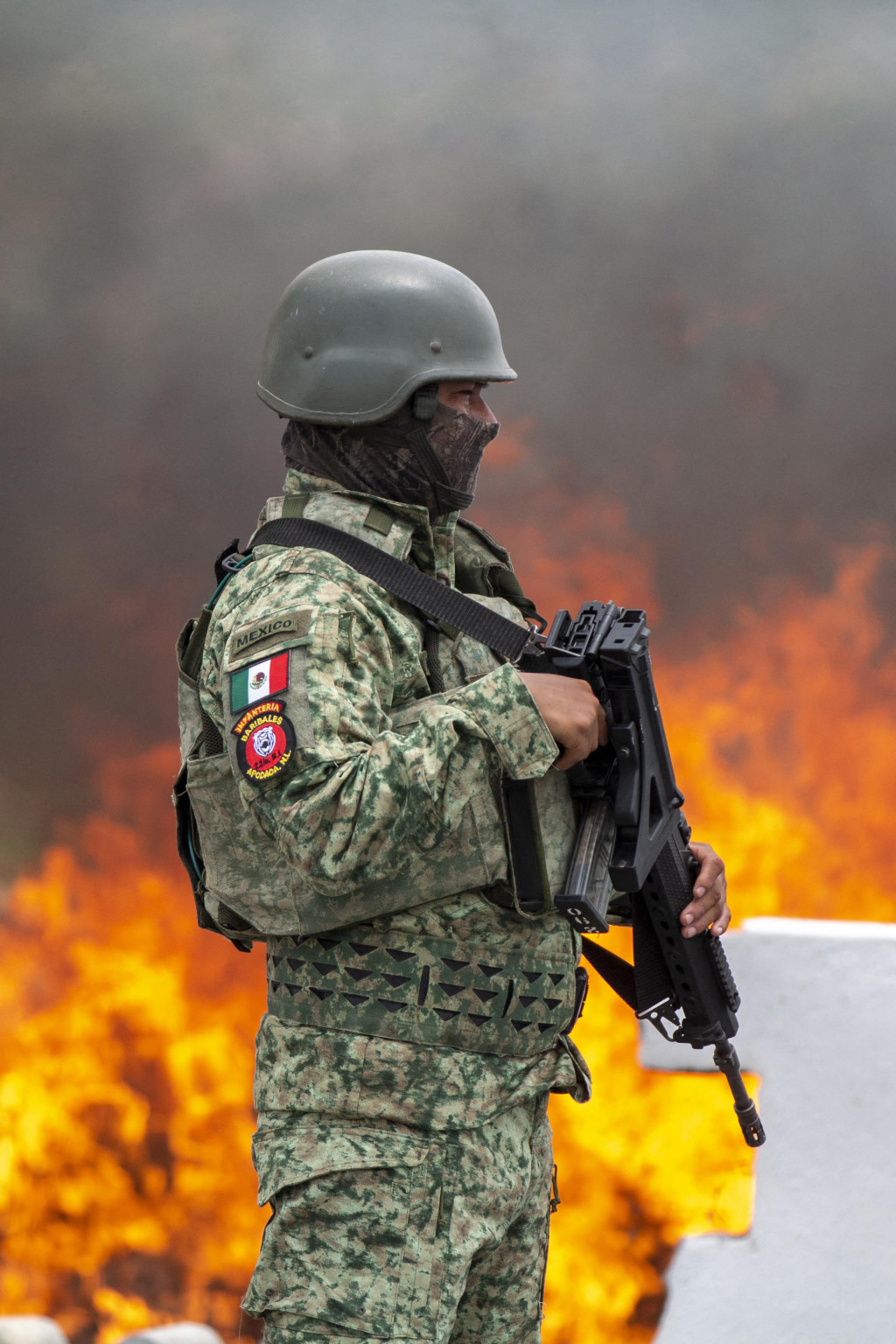
Diana Roy contributed to this report. Michael Bricknell and Will Merrow helped create the graphics. Header image by Julio Cesar Aguilar/AFP/Getty Images.
What Is Hezbollah?
The Taliban in Afghanistan
U.S.-Cuba Relations Explained